
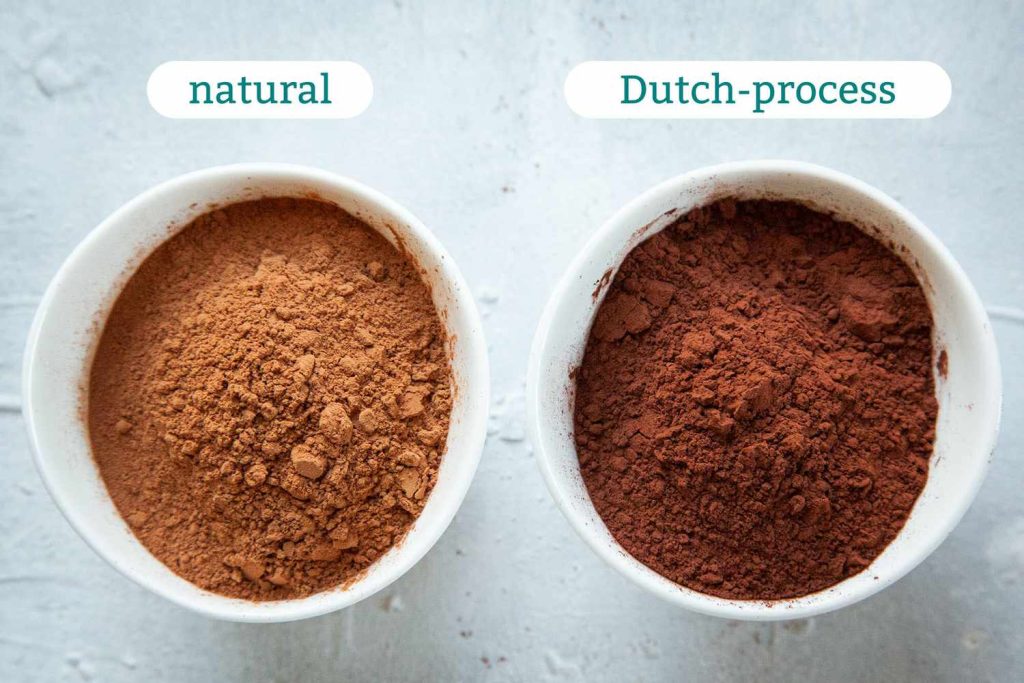
Grab two bags of cocoa powder off the shelf and they can look nearly identical — same brown powder, same rich chocolate smell. But swap one for the other in a recipe, and things can go sideways fast. Understanding the difference between natural and alkalized isn’t just trivia; it’s the key to getting your baking right every time.
Same Bean, Very Different Processing
Both types start life as the same roasted cocoa bean. The split happens afterward.
Natural cocoa powder is simply ground from roasted cocoa beans with nothing added. It keeps the bean’s natural acidity, landing around a pH of 5 to 6. That acidity is what gives natural cocoa its sharper, more intense chocolate flavor — and its lighter, reddish-brown color.
Alkalized cocoa powder — often called Dutch-process cocoa — goes through an extra step. It’s treated with an alkalizing agent that neutralizes the natural acidity, pushing the pH closer to 7. The result is a smoother, milder flavor and a darker, sometimes almost black-brown color, depending on how heavily it’s processed.
Why the pH Difference Actually Matters of Cocoa Powder
This is where things get practical, especially in baking. Cocoa powder’s acidity interacts directly with your leavening agents.
- Natural is neutral, so it won’t react with baking soda the same way. Recipes built around natural cocoa typically call for baking soda for this reason
- Alkalized is acidic, so it reacts with baking soda to help baked goods rise. Recipes designed for Dutch-process cocoa usually rely on baking powder instead, since that provides its own acid-base reaction to create lift.
Swap one for the other without adjusting the leavening, and you risk a cake that’s dense, flat, or oddly tasting — even if every other ingredient was measured perfectly.
Flavor and Color Cocoa Powder: Picking the Right One
Beyond chemistry, the two powders simply taste and look different:
- Natural cocoa powder brings a brighter, slightly fruity, more assertive chocolate flavor — great for brownies, chocolate chip cookies, and recipes where you want that classic cocoa punch.
- Alkalized cocoa powder delivers a deeper, mellower flavor with less bitterness, and its darker color is prized in recipes like Oreo-style cookies, rich chocolate cakes, and hot chocolate mixes.
Neither is objectively “better” — it depends entirely on the flavor profile and texture a recipe is aiming for.
A Quick Rule of Thumb
If a recipe calls for baking soda, it’s very likely written for natural cocoa powder. If it calls for baking powder, it’s likely written for alkalized cocoa powder. When in doubt, check the ingredient list on your cocoa tin — most brands label clearly which type you’re holding.
Getting this one detail right is a small step that makes a noticeable difference in how your baking turns out.
Looking for Cocoa Products from Indonesia?
We supply a range of Cocoa Products from Indonesia, including:
Cocoa Beans | Cocoa Nibs | Cocoa Mass | Cocoa Butter | Cocoa Powder
Tell us what you are looking for, your required quantity, and your destination.
We can help you explore the right cocoa product for your business.
Start Your Cocoa Journey
Looking for a reliable cocoa product supplier?
👉 Contact us via WhatsApp to discuss product specifications, availability, MOQ, and current pricing.
One cocoa bean. Many possibilities. Let’s find the right one for your business.